

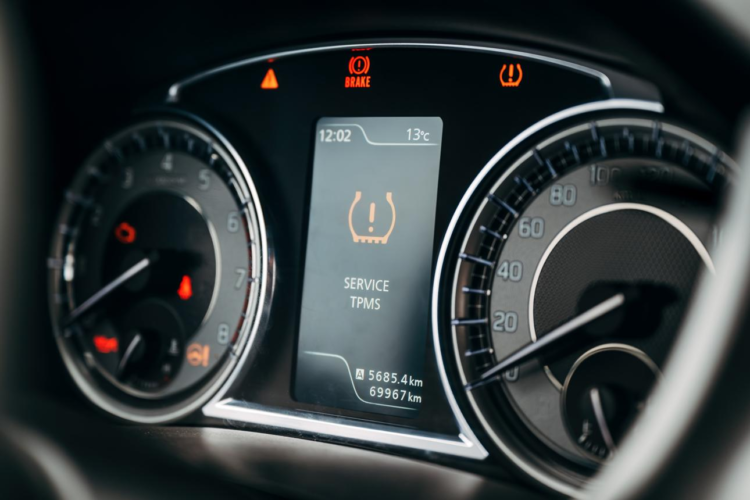
The Tire Pressure Monitoring System (TPMS) helps drivers maintain proper tire pressure by displaying a warning light whenever pressure drops below recommended levels.
Many drivers ignore the TPMS light, but doing so can affect safety, fuel economy, and tire life.
What Is TPMS?
TPMS uses sensors mounted inside the wheels to monitor tire pressure in real time.
The system alerts the driver when:
- Tire pressure is too low
- Sensor batteries fail
- Sensors lose communication
- TPMS programming issues occur
Common Causes of TPMS Warning Lights
Low Tire Pressure
Temperature changes often cause tire pressure to decrease, especially during cooler months.
Punctures or Leaks
Small punctures may slowly reduce tire pressure over time.
Faulty TPMS Sensors
Most TPMS sensor batteries last between 5-10 years before replacement is needed.
Tire Rotation or Replacement
After changing wheels or rotating tires, TPMS relearn procedures may be required.
Benefits of Proper Tire Pressure
Improved Fuel Economy
Correct tire pressure reduces rolling resistance and improves efficiency.
Longer Tire Life
Even wear extends tire lifespan.
Better Safety
Proper inflation improves braking and handling performance.
When Should You Reset TPMS?
A TPMS reset may be necessary after:
- Tire replacement
- Wheel replacement
- Sensor replacement
- Tire rotation
- Air pressure adjustment
Conclusion
The TPMS warning light is an important safety feature. Prompt diagnosis and reset procedures help ensure your tires remain in optimal condition.
Need TPMS Service?
Carwory provides TPMS diagnostics, sensor programming, and reset services for most vehicle makes and models.
Comments